Follow
Finding luxury property in Sydney from thousands of miles away might seem like a daunting challenge, but thousands of UK buyers are doing it successfully every year. The secret? Many start their search on familiar ground before diving into unfamiliar Australian platforms.
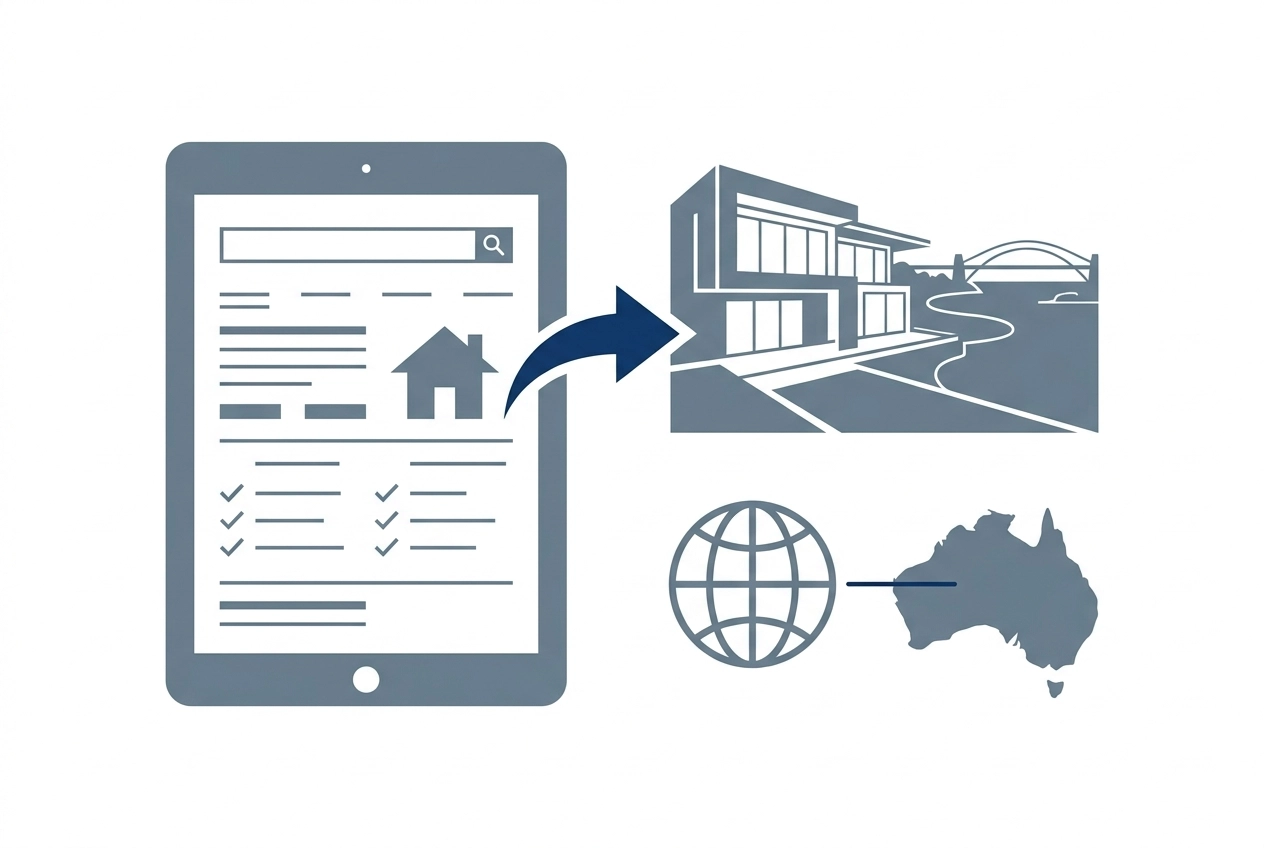
Rightmove property for sale listings have long been the go-to resource for British house hunters, and savvy international buyers are leveraging this trusted platform as a stepping stone toward securing premium real estate in Sydney’s most desirable suburbs. From Mosman’s harbourside mansions to Paddington’s elegant terraces, the process is more accessible than most people realise.
In this tutorial, you will discover exactly how UK buyers navigate Rightmove’s international search features to identify Sydney luxury properties, what filters and tools deliver the most relevant results, and how to transition smoothly from browsing to making serious enquiries. You will also learn how to interpret Australian property listings through a UK buyer’s lens, avoiding common pitfalls along the way. Whether you are relocating, investing, or purchasing a holiday home, this guide gives you a clear and confident starting point.
What Rightmove Actually Shows You About Australian Property
When UK buyers begin researching property abroad, they reach instinctively for the platform they already trust. Rightmove, the UK’s number one property website, hosts a dedicated overseas portal that includes a section specifically for Australian property, confirming that real cross-border search traffic flows between British buyers and the Australian market. This is not a theoretical audience. These are active property seekers, comfortable navigating Rightmove’s familiar interface, who have extended their search beyond Europe and landed on Sydney, Melbourne, and Queensland listings as part of a genuine acquisition journey.
Australia in Global Company
The placement of Australia within Rightmove’s overseas section carries more significance than it might first appear. Australia sits alongside Spain, France, Portugal, Italy, and Greece as a featured destination. For a UK buyer browsing overseas property, this editorial positioning is quietly powerful. It frames Sydney not as an anglophone relocation choice driven by visa routes or family ties, but as a peer destination to the Algarve, Tuscany, and the Côte d’Azur. The implicit message is one of lifestyle parity and aspirational equivalence. Sydney belongs in the same mental category as the world’s most coveted luxury property markets, and for buyers arriving at Australian listings through this pathway, that framing shapes their expectations from the first click.
What the Portal Can and Cannot Tell You
Understanding Rightmove’s structural role is essential before placing too much weight on what it delivers. Rightmove is a listings aggregator, not an advisory service. It surfaces inventory and connects buyers with agents; it does not provide counsel, market context, or on-the-ground intelligence. For Australian listings specifically, this limitation is acute. The overseas portal presents price, property type, bedroom count, images, and agent contact details. What it cannot offer is any suburb-specific guidance, no differentiation between Sydney’s Eastern Suburbs prestige corridor and outer metropolitan areas, no luxury market benchmarking, and no indication of where a discerning international buyer should direct serious attention. A buyer can confirm that Australian property exists on the platform. They cannot learn from Rightmove alone whether a listing at a given price represents genuine value in a specific market.
A £6.2 Billion Signal of Convergence
The relationship between UK and Australian property ecosystems extends well beyond browsing behaviour. REA Group, the parent company of Australia’s leading domestic property platform, made a £6.2 billion acquisition bid for Rightmove, a corporate manoeuvre that underscores how deeply the two markets are already intertwined at the platform and ownership level. The same parent group that controls dominant property portals in Australia moved to acquire the UK’s equivalent infrastructure. Whatever the final outcome of that process, the strategic intent is unambiguous: these are not separate markets operating in isolation, but increasingly integrated ecosystems sharing capital, technology, and user bases.
The Gap That Opens After the Search
The practical implication for any serious buyer using Rightmove to research Australian property is straightforward. The portal is the beginning of the journey, not the destination. Knowing that Sydney property appears in search results answers only the most preliminary question. It does not address which suburbs command genuine prestige, what the current dynamics of the Eastern Suburbs luxury market look like, how recent record sales compare to listed asking prices, or which professional relationships, including legal, financial, and advisory, a UK-origin buyer needs to navigate an acquisition successfully. That question, “now what?”, is precisely where the value of informed, specialist guidance becomes not merely useful but essential.
Understanding Sydney’s Two-Speed Property Market
If you have been reading coverage of the Australian property market in the Financial Times or catching segments on BBC News, you will have encountered figures that appear straightforwardly discouraging. Sydney prices fell 0.6% in July 2026, the steepest monthly decline of any Australian capital city, and are down 3.1% year-on-year. Those statistics are accurate. They are also, for anyone operating at the prestige level, structurally misleading in a way that could cause a well-resourced buyer to make a fundamentally misinformed decision.
Two Markets Running Simultaneously
Pillinger’s Winter 2026 Eastern Suburbs Luxury Property Market Report frames the current dynamic with unusual clarity: “The 2025/2026 financial year closed with two markets running side by side. The broader market softened as buyers grew more deliberate. The prestige tier did not follow.” This bifurcation is not a marketing claim. It is a structural reality driven by fundamentally different buyer profiles, different motivations, and different relationships with the macroeconomic conditions that dominate headline coverage.
The numbers that make headlines reflect the broad market: the national median home price sits at $894,000 as of July 2026, with houses at $989,000 and units at $730,000. These figures have essentially no relevance as reference points for a buyer operating in the $5 million-plus prestige segment. They describe a market shaped by mortgage serviceability constraints, rate sensitivity, and affordability pressures that simply do not govern decisions at the ultra-premium tier.
What the Record Books Actually Show
The most instructive single data point from FY2025/26 is not a median or an index. It is a transaction. The highest residential sale in Australia for the financial year was $83,500,000, achieved for 19 Bayview Hill Road, Rose Bay. That result does not occur in a market that is deteriorating at the prestige level. It occurs in a market where the right property, properly prepared and introduced to the right buyer, commands a price that resets national expectations entirely. As Brad Pillinger has noted, records are not set because the market is strong in aggregate; they are set because rare properties reach the buyers who are positioned and motivated to acquire them.
Double Bay, Rose Bay, and Point Piper continued attracting competitive buyer interest through Winter 2026 in a pattern that bears no meaningful relationship to the broader Sydney indices. The Pillinger report specifically identifies Double Bay as outperforming across both houses and apartments during this period, and highlights the emergence of house-scale apartments and penthouses as a sub-category actively resetting price ceilings across the Eastern Suburbs. For a buyer whose interest is in this geography and this tier, the 3.1% annual decline figure is a distraction rather than a guide.
The Rate Environment in Proper Context
The RBA cash rate, held at 4.35% following three increases earlier in 2026, with Governor Michele Bullock maintaining a hawkish stance, represents a genuine and material headwind for volume-driven segments of the Australian market. It is suppressing transaction numbers, extending decision timelines, and contributing to the price softening visible in the headline indices. For buyers whose purchasing capacity depends on debt serviceability, the rate environment matters enormously.
For ultra-premium buyers, the picture is different. NAB’s analysis confirms that the prestige market “isn’t driven by the same fundamentals as the broader housing sector.” Cash-heavy buyers, equity-rich downsizers, and international purchasers moving capital across borders are not meaningfully rate-sensitive. For this cohort, the RBA’s position functions as macroeconomic context rather than a constraint on action. The rate environment that is cooling the general market is simultaneously concentrating activity at the prestige end, as buyers with optionality choose quality over volume.
Understanding this two-speed reality is not merely useful context; it is the foundational analytical step that separates a well-informed prestige buyer from one who has allowed general market narratives to shape decisions about a fundamentally different segment.
Double Bay: The Suburb Rightmove Cannot Tell You About
When Pillinger published its Winter 2026 Eastern Suburbs Luxury Property Market Report, one headline stood apart from the broader narrative of market softening: Double Bay had outperformed the Eastern Suburbs as a whole across both houses and apartments. The report framed it explicitly as “a spotlight on Double Bay” and positioned the suburb as the village that held its ground while buyers elsewhere grew more deliberate. This is precisely the category of intelligence that no overseas portal aggregator, including Rightmove’s overseas listings section, is structured to surface. A UK-origin buyer browsing Australian property on a generic listings platform will encounter addresses, price guides, and perhaps a floor plan. They will not encounter a suburb-level performance narrative that tells them where competitive pressure is concentrating inside a softening market.
Double Bay’s Position Within the Eastern Suburbs Hierarchy
Understanding why Double Bay outperformed requires understanding where it sits within the Eastern Suburbs’ internal geography. Point Piper is Sydney’s most prestigious address by price, but its scale is limited and its stock rarely comes to market. Rose Bay commands significant prestige, as evidenced by the $83.5 million sale of 19 Bayview Hill Road, which set the national residential sales record for FY 2025/26. Double Bay occupies a different register entirely: more village-scale and walkable than either of those suburbs, yet more commercially activated than its quieter neighbours. The concentration of high-end retail, European-style dining, and accessible waterfront along the bay creates an environment that feels instinctively familiar to globally mobile buyers accustomed to neighbourhoods like South Kensington or the Marais. For buyers who want prestige without isolation, it delivers a particular kind of urban luxury that the raw sales data alone cannot describe.
The House-Scale Apartment and the London Buyer
The second headline from Pillinger’s Winter 2026 report was the emergence of “penthouse results resetting the ceiling in the East” and the rise of the house-scale apartment as a distinct sub-category. This product type is immediately legible to buyers whose primary reference point is prime London. A buyer who has spent a decade living in a lateral apartment across Knightsbridge or a penthouse above Chelsea Harbour understands the proposition instinctively: the space and amenity of a house, the lock-and-leave security of an apartment, positioned at the top of a prestige building in a suburb with genuine lifestyle density. What Pillinger’s report signals is that this sub-category is not simply available in Double Bay; it is actively resetting what the market will accept as a price ceiling. That matters for buyers calibrating their expectations from abroad.
The Arbitrage Case That Generic Portals Cannot Articulate
The most consequential insight for a UK-origin buyer is one that no listings platform is positioned to frame: a prestige apartment in Double Bay, even at the upper end of the current market, will typically represent a materially lower entry point than a comparable property in Mayfair, Knightsbridge, or Chelsea. With the Australian dollar trading at a structural discount to sterling, that gap widens further once the purchase is denominated in the buyer’s home currency. This is genuine luxury arbitrage, not a compromise. The buyer is not trading down in quality or location; they are acquiring a comparable lifestyle asset at a different point on the global price curve. Generic property portals are not designed to surface this kind of comparative framing. They list what is available; they do not interpret what it represents relative to a buyer’s existing reference market.
What Headquarter Proximity Actually Means
Kincade International Realty is headquartered in Double Bay, and that fact carries operational weight that extends well beyond a marketing point. Suburb-level outperformance data of the kind Pillinger’s report surfaces is meaningful only when it can be translated into acquisition strategy, and that translation requires local network access: knowledge of which stock is approaching the market quietly, which buildings have upcoming availability that has not yet reached a public listing, and which vendors are genuinely motivated rather than testing sentiment. An overseas listings platform can aggregate what is publicly available. It cannot replicate the intelligence that comes from operating continuously inside the suburb’s transaction ecosystem. For an informed acquisition in Double Bay, that distinction is the difference between reacting to what the market shows and positioning ahead of what it is about to offer.
The Practical Buyer Journey: From Rightmove Search to Settlement
Understanding the full arc of an Australian luxury property acquisition, from the initial Rightmove search through to settlement day, requires navigating a process that is materially different from purchasing property in the United Kingdom. Each stage carries distinct legal, financial, and logistical requirements that a UK-based buyer must engage with proactively, not reactively.
FIRB Approval: Begin Here, Not Later
For most foreign nationals, applying for Foreign Investment Review Board approval through the Australian Taxation Office is a non-negotiable prerequisite to purchasing residential property in Australia. Critically, receiving approval, not merely submitting an application, must occur before the acquisition is completed. Foreign buyers are currently prohibited from purchasing established dwellings under a federal ban, meaning new builds and off-the-plan properties are the primary available pathway. Exceptions exist for temporary residents, properties earmarked for redevelopment, and certain employment circumstances, but these require specialist legal advice to navigate correctly. Applications are submitted electronically and carry a fee that scales with the property’s sale price, while penalties for non-compliance are severe: up to AUD 3.3 million for individuals or ten years’ imprisonment. The practical implication is that a UK buyer must build FIRB approval milestones directly into contract conditions, which requires legal representation experienced with foreign investment rules from the moment a target property is identified, not once an offer has been accepted.
Currency: The Hidden Variable in Your Budget
AUD/GBP exchange rate dynamics deserve far more attention than most buyers give them at the outset. On a luxury acquisition priced in the tens of millions of Australian dollars, even a modest movement in the exchange rate can alter the effective sterling cost by hundreds of thousands of pounds. A buyer who converts funds reactively, responding to settlement deadlines rather than currency conditions, risks either overpaying materially or entering negotiations with compressed flexibility because their sterling budget has effectively shrunk. Engaging a private banking partner or a specialist foreign exchange advisory service before making an offer provides the ability to set rate alerts, explore forward contracts that lock in rates for future transfers, and structure staged payments aligned with deposit and settlement obligations. This is not a peripheral administrative task; at the luxury end of the Sydney market, where properties regularly transact above AUD 10 million, strategic currency management is a substantive component of the acquisition cost.
Australian Conveyancing: Not a UK Transaction in Disguise
Buying property in Australia as a UK buyer involves a legal process with structural differences that can create significant delays if approached without preparation. Unlike the UK model, where exchange and completion are separated by a negotiated period, Australian contracts operate on a framework where the deposit is paid on exchange of contracts, typically around ten percent of the purchase price, and settlement follows within a period commonly ranging from 30 to 90 days in New South Wales. Both licensed conveyancers and property solicitors operate in Australia; a UK buyer accustomed to solicitor-led transactions should understand that the roles and licensing frameworks differ by state. NSW stamp duty obligations for foreign buyers include a surcharge above the standard rate, adding a further cost layer requiring early calculation. The FIRB approval timeline must be reflected in contract conditions before signing, which makes early engagement with an Australian conveyancer or property solicitor, ideally one experienced with foreign purchasers, not a courtesy but a competitive necessity.
The Buyer’s Agent: Your Most Consequential Decision
A UK buyer operating remotely across time zones faces structural disadvantages that no amount of portal research can fully overcome. Sydney’s prestige market relies heavily on auctions as a primary sales method, and bidding remotely without local representation is genuinely impractical at the premium end. A substantial proportion of high-value properties in suburbs such as Double Bay, Point Piper, and Rose Bay transact before public listing, through agent-to-agent relationships and private introductions that a buyer without local networks simply cannot access. A qualified buyer’s agent provides market intelligence calibrated to current conditions, negotiation capability grounded in vendor agent relationships, and coordination across the full professional team including FIRB specialists, conveyancers, building inspectors, and currency advisors. For a buyer whose primary window into the Sydney market opened with a Rightmove overseas listing, the buyer’s agent is the mechanism through which that initial search interest is converted into a credible, competitive acquisition capability.
Where an Internationally Networked Agency Changes the Outcome
Generic overseas listings portals surface only publicly available stock, which represents a fraction of what actually trades in Sydney’s premium suburbs at any given time. An internationally networked luxury agency holds direct relationships with Sydney vendor agents, enabling access to properties before they reach any portal. Beyond access, the coordination function is equally valuable: referrals to FIRB-specialist lawyers, introductions to private bankers and FX advisors, and end-to-end facilitation that compresses the gap between a UK-based buyer’s timeline and Sydney-market execution. For buyers who first encountered Australian property through an overseas search, that professional infrastructure is what transforms a promising listing into a successful, legally sound settlement.
FIRB and Foreign Buyer Rules: A Practical Overview
For most foreign nationals, FIRB approval is a legal prerequisite before purchasing residential property in Australia, and the administrative and financial implications of that requirement deserve careful attention before you begin viewing properties. The application fee is tiered by purchase price and applies per property: in the 2026-27 financial year, buyers acquiring a property valued at up to one million dollars pay $15,600, while those acquiring up to two million dollars pay $31,300. Critically, these fees are generally non-refundable if approval is refused or the purchase does not proceed. For prestige buyers in Sydney’s Eastern Suburbs who may wish to assess several properties before committing, applying property-by-property creates compounding costs and compounding delays. The commercially intelligent approach is to engage with the FIRB process early, ideally before you have identified a specific target property.
Not every foreign buyer falls into the same regulatory category, and the distinction matters considerably. Australian permanent residents are generally treated equivalently to citizens for residential property purposes and typically fall outside FIRB requirements. Temporary visa holders, by contrast, are captured by the foreign person definition even when living and working in Australia full-time. Buyers purchasing jointly with an Australian citizen, permanent resident, or New Zealand-citizen partner may qualify for a specific exemption that removes the approval requirement entirely. Understanding which category applies to your circumstances before entering the market avoids the complications that arise when conditional offers are made without the correct regulatory groundwork in place.
The property type in question adds a further layer of complexity. Since 1 April 2025, foreign persons have generally been prohibited from purchasing established dwellings in Australia, a measure announced by the Federal Government with enforcement funding of $5.7 million directed to the ATO’s compliance team. Prestige buyers in Sydney’s Eastern Suburbs are most commonly drawn to established homes and apartments, and this restriction carries direct relevance for that buyer profile. Foreign buyers remain able to acquire new dwellings, qualifying near-new dwellings, and vacant residential land subject to development conditions. Given the evolving nature of this framework, including a Foreign Investment Conditions Review currently underway with public consultation closing in September 2026, independent legal advice from a qualified specialist is not optional; it is foundational.
FIRB approval does not guarantee a purchase, but it signals to a vendor’s agent that a buyer is organised, credible, and capable of moving without unnecessary conditions. In a prestige market where competitive interest is concentrated and auction campaigns move quickly, that signal carries weight. Kincade International Realty maintains active referral relationships with FIRB-experienced legal specialists, which compresses the administrative timeline and allows buyers to act with the decisiveness that the Eastern Suburbs prestige market consistently demands.
What the REA–Rightmove Story Means for Australian Sellers
When REA Group pursued a £6.2 billion acquisition of Rightmove across September 2024, the transaction was not simply a portal company seeking revenue diversification. It was the Australian property industry’s most senior operator placing a multi-billion-pound valuation on something far more specific: aggregated UK buyer intent data, and the commercially documented relationship between British property search behaviour and Australian prestige market demand. REA’s stated ambition was to create a true global technology leader with number one positions in both Australia and the UK. The underlying logic was straightforward. The two markets share language, legal heritage, and a high-net-worth migration corridor that makes UK-origin buyers a structurally recurring presence in Sydney’s Eastern Suburbs, not a seasonal anomaly that appears when exchange rates align.
REA ultimately withdrew its bid on 30 September 2024 after Rightmove’s board unanimously rejected all four successive proposals, with the final offer representing a 45% premium to Rightmove’s 12-month volume-weighted average price. The rejection means that, as of 2026, no single platform connects Australian and UK prestige property inventory at scale. The integration that REA was prepared to pay £6.2 billion to achieve simply does not exist at the portal level. For a seller, this is not an abstract market structure observation. It is a direct and practical gap: the globally mobile buyer researching Sydney luxury property from London, Geneva, or Singapore cannot reach your listing through platform mechanics alone, because those mechanics remain incomplete.
This is precisely where the difference between a domestic-only listing and an internationally distributed one becomes most consequential. At the prestige end of the Sydney market, where a single additional qualified overseas buyer can shift a final sale result by millions of dollars, the composition of the buyer pool matters more than volume. The $83.5 million sale of 19 Bayview Hill Road, Rose Bay in FY2025/26 did not achieve that outcome because it appeared on Australian portals. It achieved that outcome because the buyer pool that competed for it was genuinely global.
Kincade International Realty’s marketing capability is built around closing exactly this gap. A Double Bay or Eastern Suburbs property listed through Kincade reaches buyers who are actively weighing Sydney against London, Monaco, and Singapore at comparable price points, through channels that include international property platforms, private buyer networks, and direct relationships with high-net-worth clients across Asia-Pacific and Europe. This is not a supplementary service added to a domestic campaign; it is the baseline architecture of how a prestige property should be brought to market in 2026.
The strategic lesson for sellers is unambiguous. When the world’s leading property data businesses are prepared to spend billions of pounds to access cross-border buyer intent, international exposure cannot be treated as an optional upgrade for a prestige listing. It is the competitive minimum. Sellers who approach the market through a domestically focused agency are not saving on marketing; they are ceding the portion of the buyer pool that the entire platform industry has already recognised as the most commercially significant.
From a Rightmove Search to Double Bay: Your Next Steps
If a Rightmove search for Australian property for sale has brought you to this point, the single most important next step is replacing a portal browse with a direct conversation. Sydney’s prestige Eastern Suburbs market moves on relationships, local intelligence, and off-market access, not public listings alone.
Kincade International Realty specialises in precisely this buyer profile: internationally oriented, financially sophisticated, and seeking curated market access that no portal can replicate, regardless of its scale or the billions bid for its underlying data. Whether your immediate interest is a Double Bay apartment, a prestige Eastern Suburbs house, or simply understanding what Sydney’s luxury market can offer relative to London, Singapore, or Hong Kong, the starting point is a conversation rather than a search result.
Before that conversation, four practical steps will position you to act decisively when the right property is identified:
- Obtain FIRB advice early. Foreign buyer obligations apply before any offer is made, not after.
- Engage private banking or FX advisory first. AUD exposure and currency timing should be structured before you identify a target property.
- Ensure legal representation is in place. Independent NSW-qualified conveyancing counsel must be retained before any offer is submitted.
- Work with a locally based, internationally networked luxury agency from the outset. Local market intelligence and global buyer relationships are what convert serious interest into successful acquisition.
Kincade International Realty is based in Double Bay and available to begin that conversation now.
Conclusion
Finding your dream Sydney luxury property from the UK is entirely within reach, and Rightmove is the perfect launchpad for your journey. To recap the key takeaways: Rightmove’s international search tools give you instant access to premium Sydney listings; understanding Australian property terminology helps you evaluate opportunities accurately; filtering by suburb, price, and property type saves considerable research time; and transitioning from browsing to formal enquiry requires only a few straightforward steps.
The gap between browsing from your sofa in Britain and owning a harbourside home in Mosman is smaller than you imagined. You now have the knowledge to search strategically, interpret listings confidently, and engage with Australian agents professionally.
Start your search on Rightmove today, bookmark your favourite Sydney suburbs, and take that first concrete step toward making your Australian property dream a reality.