Follow
Sydney’s Eastern Suburbs have long been synonymous with prestige, coastal beauty, and some of the most sought-after addresses in Australia. But as we move into 2026, the landscape of luxury real estate is shifting in ways that even seasoned buyers are finding difficult to navigate. For those just beginning their journey into high-end property, understanding these changes is not just helpful; it is essential.
This guide was created specifically for newcomers who want to make sense of the Eastern Suburbs market without feeling overwhelmed. Whether you are exploring real estate for the first time or simply trying to understand what separates a good investment from a great one, you will find clear, well-researched answers here. From Bondi to Vaucluse, from Double Bay to Bronte, the real estate opportunities across this iconic stretch of Sydney are as varied as they are exciting.
By the end of this analysis, you will have a solid understanding of current market trends, key suburbs worth watching, and the factors that drive value in one of the world’s most competitive luxury property markets. Let’s begin.
Why Sydney’s Eastern Suburbs Leads Australia’s Prestige Property Market
Australia’s prestige property market delivered its defining statement for FY 2025/26 with the confirmed sale of 19 Bayview Hill Road, Rose Bay, at $83,500,000, securing the title of the highest residential transaction in the country for the financial year. This single result is more than a headline figure; it is confirmation that Sydney’s Eastern Suburbs operates in an entirely different league from every other residential market in Australia. For buyers and investors new to understanding where serious capital flows in this country, the Eastern Suburbs is the unambiguous answer.
What makes this result particularly significant is the market context surrounding it. According to Pillinger’s Winter 2026 Sydney Eastern Suburbs Luxury Property Market Report, the broader Australian market softened noticeably across FY 2025/26, with buyers becoming more deliberate and cautious at lower price points. The prestige tier, however, did not follow that pattern. Where quality, scale, and position genuinely aligned, buyer competition held firm. This bifurcation matters enormously for anyone trying to understand where property investment carries the greatest structural resilience.
A notable sub-trend reshaping this market is the rise of the house-scale apartment, a distinct category identified in the Pillinger report as actively resetting price ceilings across Sydney’s East. These are properties that deliver the square footage and specification of a substantial family home within a penthouse or full-floor apartment format, offering owners the lock-up-and-leave convenience that high-net-worth lifestyles increasingly demand. This segment is not a niche curiosity; it is a structural shift in how premium buyers are defining value.
At the centre of all this activity sits Double Bay, which the Pillinger report spotlights as a suburb that outperformed across both houses and apartments despite broader softening. Its combination of harbour proximity, high-street amenity, and a level of discretionary privacy that genuine wealth requires makes it the natural home base for both domestic ultra-high-net-worth buyers and international portfolio builders.
Looking further ahead, Australia’s prestige property landscape across the Eastern Suburbs is subject to active institutional forecasting through 2031, segmented by property type and business model. This sustained analytical coverage signals that sophisticated capital regards the Eastern Suburbs not as a market cycle play, but as a durable, long-term asset class with compounding strategic value.
Who Is Buying Luxury Real Estate in 2026?
The buyer pool driving Sydney’s Eastern Suburbs prestige market in 2026 is more diverse, more internationally connected, and more strategically motivated than at any previous point in the suburb’s history. Understanding who these buyers are, and what is driving their decisions, is essential context for anyone preparing to transact in Double Bay and surrounds.
The Portfolio Builder Has Replaced the Single-Home Buyer
Global data from the Sotheby’s International Realty 2026 Luxury Outlook confirms a structural shift in buyer intent: only 51% of luxury homebuyers in 2025 purchased a primary residence. The remaining 49% were actively expanding multi-property portfolios across domestic and international markets. This is not a marginal trend. It represents a near-even split between lifestyle buyers and wealth-building investors operating at the top end. For the Eastern Suburbs, this means a significant proportion of incoming buyers are not choosing between Sydney and another city; they are adding Sydney to an existing portfolio of properties across multiple jurisdictions. The practical implication is that these buyers move quickly, transact with high levels of financial independence, and are often less constrained by financing timelines than their mainstream counterparts.
International Capital and the FIRB Requirement
International buyers represent a growing share of Eastern Suburbs transactions, drawn by Australia’s political stability, strong rule of law, and comparatively transparent property ownership framework relative to other Asia-Pacific luxury destinations. Foreign buyer activity in comparable global luxury markets surged 44% in 2025, and Australia’s credentials as a safe, high-quality destination for mobile capital position it well to capture continuing inflows. However, non-resident buyers must obtain Foreign Investment Review Board (FIRB) approval before acquiring Australian residential property. This is a mandatory regulatory step, not an optional formality. Application fees are calculated on the purchase price and can reach tens of thousands of dollars for high-value transactions. Processing timelines vary, but engaging with the FIRB process before executing a contract of sale avoids potentially costly delays and protects the buyer’s negotiating position. Any international buyer considering an Eastern Suburbs acquisition should factor FIRB approval into their pre-purchase timeline from the outset.
Domestic UHNW Buyers and Wealth Preservation Logic
Among domestic ultra-high-net-worth buyers, Eastern Suburbs property is increasingly evaluated on two parallel criteria: lifestyle quality and capital preservation. Sydney’s limited supply of premium harbour-view and waterfront land creates a structural constraint on future stock, which acts as a long-term floor under top-end values. Wealth migration is actively reshaping luxury markets globally, and domestically, established multi-property owners are expanding their Sydney holdings with deliberate intent. The Eastern Suburbs is not simply where wealthy Sydneysiders live; it is where they concentrate generational wealth in tangible, finite-supply assets.
The Three Buyer Segments Active Right Now
Buyer profiles in Double Bay and surrounding suburbs currently span three distinct groups. First-time prestige buyers are entering the market following recent interest rate adjustments, often backed by inherited equity rather than traditional mortgage financing. Established multi-property owners are selectively expanding their Sydney footprints, prioritising position, privacy, and scale. Internationally-based Australians are acquiring local anchor assets, motivated by lifestyle optionality and a desire to maintain a premium foothold in the Sydney market regardless of where they are currently based. Each group brings different priorities to the negotiation table, and understanding which profile applies to a given transaction shapes everything from pricing strategy to contract conditions.
The Features Luxury Buyers Demand Most in 2026
Privacy and Security: The Foundation of Luxury Demand
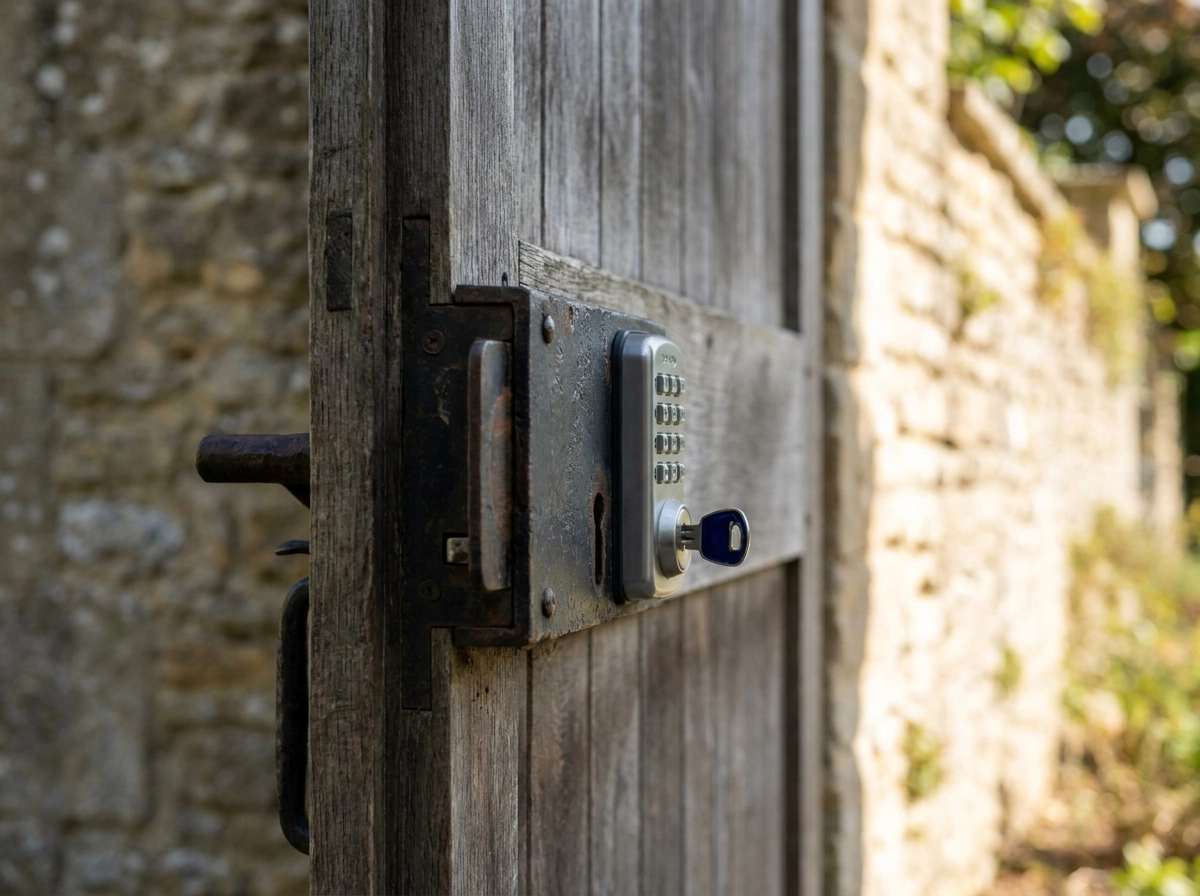
Understanding what luxury buyers actually want in 2026 requires moving past surface-level aesthetics and into the structural priorities shaping purchasing decisions at the top of the market. According to the Sotheby’s International Realty 2026 Luxury Outlook, privacy and security have emerged as the single most cited priority for wealthy homebuyers worldwide. The data point that makes this trend genuinely striking is its apparent paradox: US home burglaries have fallen 68% over the past three decades according to FBI statistics, yet global spending on smart-home security is simultaneously projected to reach $39 billion by 2029. The driver is not statistical risk; it is perceived exposure, elevated public profiles, and the particular vulnerabilities that come with digital-age wealth. For buyers in Sydney’s Eastern Suburbs, this translates directly into demand for properties offering discreet street presence, integrated security infrastructure, and the kind of natural seclusion that deep-set waterfront lots, elevated positions, and generous boundaries provide as a matter of geography rather than retrofit.
Multigenerational Living Is Rewriting the Brief
The structural shift with the most direct impact on floor plan requirements is multigenerational living. Nearly one in five luxury purchases in the United States now involves buyers planning to accommodate extended family under the same roof or within the same compound. This is not a minor accommodation; it is fundamentally changing what architects and developers are producing, with multiple primary bedroom suites, each with private bathrooms, sitting rooms, and dedicated work areas, becoming standard rather than exceptional. The trend is accelerating globally as Millennial and Gen X buyers simultaneously manage the needs of young children and ageing parents, often with grandparents contributing meaningfully to the purchase itself.
In Sydney’s Eastern Suburbs, this global pattern takes a locally specific form. Buyers are actively seeking properties with DA-approved secondary dwellings, compound configurations on generous titles across suburbs such as Vaucluse, Bellevue Hill, and Dover Heights, and dual-level residences where harbour views are shared but daily living remains genuinely private. NSW planning instruments support secondary dwelling approvals in ways that make this achievable without subdivision, which is a meaningful advantage at the premium end of the market. The result is strong and sustained demand for properties that deliver multigenerational functionality without compromising the prestige address or the architectural coherence of the overall holding.
The Evergreen Premium Drivers
Beyond the headline trends, a set of enduring requirements continues to command material price premiums across the Eastern Suburbs. Luxury real estate analysts tracking 2026 buyer behaviour consistently identify indoor-outdoor living, professional-grade entertaining spaces, and resort-quality private amenity as non-negotiable rather than aspirational. In the local context, deep harbour or ocean views remain among the most reliably value-accretive attributes a property can hold, with water-facing positions in Rose Bay, Point Piper, and Vaucluse sustaining premiums that persist across market cycles. Proximity to institutions including Cranbrook, Kambala, and Sydney Grammar remains a distinct and measurable driver for families with school-age children, while access to world-class private medical facilities reinforces the Eastern Suburbs’ position as the preferred address for buyers prioritising both lifestyle and practical infrastructure.
House-scale apartments and full-floor penthouses are increasingly satisfying buyers who require robust security and genuinely low-maintenance living without accepting any compromise on space, light, or address prestige. This sub-segment is quietly resetting price ceilings across the Eastern Suburbs, offering a compelling alternative to freestanding homes for buyers whose primary residence sits within a broader multi-property portfolio strategy.
The Sydney Luxury Rental Market: What Investors Need to Know
The prestige rental sector occupies a genuinely distinct position within the broader investment landscape. Mordor Intelligence’s active 2026 to 2031 forecast for the Australian luxury residential real estate market formally segments the asset class across both sales and rental business models, a structural recognition that prestige rentals carry their own investment thesis entirely separate from capital growth strategies. For beginner investors, this is an important distinction: buying a premium Eastern Suburbs property to rent is not simply a yield play while you wait for appreciation. It is a deliberate, dual-purpose strategy with its own risk profile, tenant dynamics, and performance metrics.
Why Supply Constraints Work in an Investor’s Favour
Sydney’s Eastern Suburbs luxury rental market benefits from a structural undersupply at the premium end that shows no sign of resolving in the near term. New-build completions in inner and Eastern Suburbs locations remain negligible, with the overwhelming majority of new apartment stock concentrated in outer Western Sydney corridors. Heritage overlay constraints on many key streets across Double Bay, Rose Bay, and Bellevue Hill limit redevelopment potential, while owner-occupiers at this tier are generally reluctant to release premium stock into the rental pool. The result is a tight, restricted rental supply facing sustained demand, a combination that underpins rental premiums. Understanding the Sydney rental market in 2026 confirms that a two-bedroom apartment in the Eastern Suburbs commands between AUD $1,000 and $1,500 per week, compared to approximately AUD $680 in Parramatta.
Corporate Relocation Demand as a Tenant Quality Lever
Multinational executives, diplomatic personnel, and senior project teams requiring short-to-medium term housing near Sydney’s CBD and financial district represent a structurally distinct and high-value tenant pipeline for Eastern Suburbs investment properties. These organisations carry substantial housing budgets, prioritise compliance and consistent quality, and typically place tenants who treat the property with the care of a primary residence. This dual accountability layer, through both the managing agency and the employing organisation, materially reduces wear on high-end finishes and minimises costly void periods.
Evaluating Total Returns, Not Just Gross Yield
Beginner investors often benchmark properties on gross rental yield alone. Prestige properties in Double Bay and surrounds will typically carry lower gross yields than middle-market properties, but this comparison misses the complete picture. Capital growth trajectory, vacancy rate resilience, and tenant quality together determine risk-adjusted total returns over five to ten year holding periods. The relevant benchmark is net performance over time, not headline yield in isolation. With Sydney’s median house price reaching a record $1.76 million in 2026 and Asia Pacific real estate investment rising 38% year-over-year in Q2 2026, the macro tailwinds supporting Eastern Suburbs prestige values remain firmly in place.
Kincade International Realty’s rental listings and property management access provide investors with direct exposure to qualified tenant pools at this premium tier. Minimising void periods is the single greatest lever on net yield for prestige properties, and specialist agency relationships are the mechanism through which that outcome is consistently achieved.
How Interest Rate Cuts Are Reshaping Buyer Behaviour in 2026
The Reserve Bank of Australia’s rate reduction cycle has emerged as one of the most consequential forces reshaping buyer behaviour across Australia’s property market in 2026. Following a prolonged period of elevated rates, the RBA delivered two cuts totalling 50 basis points across February and April 2026, with markets pricing in further reductions through the second half of the year. The effect on buyer psychology was immediate and measurable: auction clearance rates in Sydney lifted above 70% by mid-2026, open home attendance increased noticeably, and properties that had sat unsold during the hiking cycle began attracting multiple offers within days. Double Bay market specialists had flagged this shift as early as December 2025, anticipating that even modest cuts would unlock a wave of deferred purchasing decisions across the broader market.
How Rate Cuts Work Differently at the Prestige Tier
For buyers operating in the Eastern Suburbs at the $5 million-plus price point, the mechanics of rate sensitivity diverge significantly from the broader market. Mainstream buyers experience rate cuts primarily as a borrowing capacity unlock, with each 25 basis point reduction adding roughly $15,000 to $20,000 to a standard loan amount. Prestige buyers, by contrast, are typically high-equity or cash-positioned, meaning they are not waiting for affordability to improve. What rate cuts do at this tier is accelerate decision-making and intensify competitive bidding. When the cost of capital falls and confidence returns, buyers who have been deliberating move quickly, and they move simultaneously, compressing the negotiation window considerably. It is worth noting that economists have cautioned against assuming rate cuts automatically produce a boom market; the consensus is that activity recovers, but selective, quality-driven buying remains the dominant pattern at the prestige level.
Capital Optimisation for UHNW Buyers
Ultra-high-net-worth buyers increasingly approach property acquisition as a portfolio strategy rather than a single transaction. Bespoke lending structures and private banking facilities, accessible through Kincade International Realty’s extended professional network, allow these buyers to deploy capital efficiently across multiple properties simultaneously. Unlike standard mortgage products, these arrangements can be structured around asset positions, investment timelines, and cross-collateralisation strategies that align with a buyer’s broader wealth management objectives. This capability becomes especially relevant during a rate-cutting cycle, when the opportunity cost of holding cash falls and strategic leverage becomes more attractive.
The Conversion Window Is Closing
Historically, the 3 to 6 months following the first cut in a cycle represent a documented entry window, where prices have not yet fully reflected the improved conditions but buyer competition is already building. Buyers who spent 2025 monitoring properties without transacting are now active participants in 2026, and the conversion from observer to purchaser is happening with notable speed. For sellers, this renewed competition among qualified buyers creates genuine pricing leverage, though achieving record-level outcomes still requires demonstrable scarcity, exceptional property condition, and the kind of professional international marketing reach that positions a home before the global audience it deserves.
The Sydney Luxury Property Buying Process: A Step-by-Step Overview
Purchasing luxury real estate in Sydney is a structured process, and understanding each stage before you begin prevents costly missteps. Whether you are a local buyer or acquiring from overseas, the following five steps outline how a prestige transaction in New South Wales typically unfolds.
Step 1: Define Your Buying Parameters
The foundation of any successful purchase is clarity about what you are actually buying and why. Before engaging agents or attending inspections, establish your ceiling budget and your realistic working budget as two separate figures. Identify your preferred property type, whether that is a standalone house, a full-floor apartment, or a dual-living configuration designed to accommodate multigenerational households. Specify location priorities such as harbour frontage, school catchment zones, walkability, or proximity to the CBD. Finally, define your purchase purpose. Given that only 51% of luxury buyers in 2025 purchased a primary residence, with the remaining 49% focused on portfolio building, your intent will shape every subsequent decision, from the legal structure you use to how you assess yield potential.
Step 2: FIRB Approval for International Buyers
Non-resident foreign buyers must obtain Foreign Investment Review Board approval before signing any contract of sale. Purchasing without approval breaches the Foreign Acquisitions and Takeovers Act and carries penalties including forced divestment and fines. Foreign non-residents are generally restricted to new dwellings, off-the-plan purchases, or vacant land. Established dwellings are only accessible to temporary visa holders with a visa validity exceeding 12 months. FIRB application fees for properties above $2 million escalate significantly, and NSW buyers face an additional 9% stamp duty surcharge plus a 4% annual land tax surcharge, with total additional costs estimated between $50,000 and $80,000 beyond the deposit. The complete timeline from FIRB application through to settlement is typically 90 to 120 days minimum. For a thorough overview of current requirements, the FIRB Approval Process: A Practical Guide for 2026 is a useful reference, alongside the official Foreign Investment in Australia portal, which is currently conducting public consultations on conditions through September 2026.
Step 3: Legal Due Diligence
Before any exchange occurs, engage a qualified NSW property solicitor or licensed conveyancer to review the contract of sale in full. This review should cover the Section 10.7 planning certificate, which discloses zoning, development restrictions, and heritage overlays affecting the property. For strata properties including apartments and townhouses, a review of the owners corporation records is essential; these reveal outstanding levies, planned special levies, building defect history, and body corporate financial health. Your solicitor will also identify any special conditions in the contract that could expose you to risk or affect your ability to obtain finance.
Step 4: Exchange of Contracts
Exchange of contracts is the legally binding moment. Both parties sign identical contracts and swap them, at which point the transaction is formalised and the deposit, typically 10% of the purchase price, is paid. For private treaty sales in New South Wales, a five-business-day cooling-off period applies, allowing the buyer to withdraw subject to a 0.25% penalty. Auction purchases carry no cooling-off period whatsoever, meaning buyers must complete all due diligence, including legal review and building inspections, before bidding.
Step 5: Settlement
The standard settlement period in New South Wales is 42 days from exchange, though this is negotiable and longer periods are common in prestige transactions involving complex finance arrangements. During this window, your lender confirms final loan approval, a building and pest inspection is completed to verify the property’s physical condition, and all parties prepare the legal documentation required to transfer title. On settlement day, the balance of the purchase price is transferred, title formally changes hands, and keys are released. Working with experienced advisors at every stage ensures this final step proceeds without delay.
The Full-Service Difference: How Kincade International Realty Supports Your Entire Property Journey
Most real estate agencies define their role as beginning when a listing goes live and ending when contracts are exchanged. Kincade International Realty operates from a fundamentally different philosophy. Through both the Kincade Advisory Service and Kincade Concierge Services, the agency provides coordinated access to a curated network of allied professionals spanning property attorneys, mortgage lenders, private banking specialists, licensed contractors, relocation and moving services, and property insurance advisers. This means the relationship does not conclude at settlement; it continues for as long as clients need support in managing, personalising, or expanding their property holdings.
Simplifying the International Buying Process
For international buyers, the complexity of acquiring Sydney real estate extends well beyond finding the right property. Foreign Investment Review Board approvals, unfamiliar Australian legal frameworks, and cross-border currency considerations each introduce friction points that can delay or derail transactions entirely. The ability to coordinate all required professional services through a single, trusted agency contact removes the most common obstacles that affect cross-border luxury acquisitions. Rather than independently sourcing a solicitor, a local lender, and a currency specialist while simultaneously navigating an unfamiliar legal system, international clients can rely on Kincade’s established network to manage this complexity with precision.
Reaching the Right Buyers Globally
Effective property marketing at the prestige level demands more than domestic listings. Kincade’s marketing capability extends across both Australian and international buyer audiences, combining domestic listing platforms with global publication partnerships and direct outreach to qualified buyer registries across Asia-Pacific, European, and North American markets. This is particularly significant given that nearly 49% of luxury homebuyers in 2025 were building multi-property portfolios rather than purchasing a single primary residence, meaning the qualified buyer for a Double Bay trophy home may be based in Singapore, London, or New York just as readily as in Sydney. Accessing that audience requires infrastructure that standard agencies simply do not maintain.
Private Banking and Portfolio Finance
The lending requirements of high-net-worth buyers structuring multi-property portfolios routinely exceed what retail banks are equipped to service. Kincade’s private banking and lending connections are specifically designed for clients requiring bespoke finance arrangements, whether for portfolio acquisition, complex ownership structures, or international capital deployment. With the global UHNW and HNW population exceeding 22.5 million in 2025, the demand for specialist finance coordination has never been greater.
Post-Settlement Concierge Support
Settlement is not the end of the journey; for many buyers it is the beginning of the most demanding phase. Concierge access to licensed contractors, interior designers, and renovation specialists through Kincade International Realty means buyers can begin personalising or preparing a newly acquired property immediately after settlement, without the delays that typically arise from sourcing trusted trades in an unfamiliar market. Whether preparing a property for occupancy, refurbishment, or rental, having verified professionals on call from day one is a practical advantage that materially changes the ownership experience.
Sydney Eastern Suburbs vs. Global Luxury Real Estate Markets
When ultra-high-net-worth individuals allocate capital across global real estate markets, they are choosing between a relatively small number of world-class destinations. London’s Mayfair and Knightsbridge, Singapore’s Sentosa Cove, Hong Kong’s Peak, and New York’s Upper East Side have historically dominated that conversation. Sydney’s Eastern Suburbs now sits at that same table, and the argument for inclusion grows stronger each year.
The structural case for Sydney rests on several foundations that competing markets cannot easily replicate. Australia’s legal system provides transparent, rule-of-law property ownership with clearly defined title protections and a stable regulatory environment. Sovereign risk is comparatively low. And unlike European or North American luxury hubs, Sydney’s Eastern Suburbs sits at the geographic centre of the Asia-Pacific’s expanding wealth corridors, providing proximity to the region’s most dynamic economies. Land scarcity in suburbs like Point Piper, Rose Bay, and Double Bay is absolute; the harbour-fronting boundaries simply cannot be extended, and new supply remains structurally constrained.
The $83,500,000 recorded sale at 19 Bayview Hill Road, Rose Bay, for FY 2025/26 has done something important for Sydney’s international reputation. It places the city’s top-end transactions within credible range of benchmark prices seen in London and Singapore, narrowing a perception gap that previously caused some global investors to underestimate what Sydney’s prestige tier could actually command. This was not a market-cycle result; it was a quality-driven outcome, which means it signals sustainable depth rather than a temporary spike.
For international buyers, currency dynamics deserve serious attention. The Australian dollar’s relative position against the USD, GBP, and SGD in 2026 directly affects the effective entry cost for foreign capital. Depending on your base currency, AUD pricing can represent a material discount or a headwind, and engaging a specialist lender or private banking contact before committing to a price position is essential.
Portfolio strategy is also reshaping demand patterns. According to Sotheby’s International Realty data, 49% of all luxury buyers globally are now building multi-property portfolios rather than purchasing a single primary residence. For those buyers, a Sydney Eastern Suburbs asset increasingly serves as the Asia-Pacific anchor of a diversified international portfolio, offering lifestyle credentials, long-term scarcity value, and regional economic exposure within a single acquisition.
Actionable Takeaways for Buyers, Sellers, and Investors
For buyers, preparation is the single most powerful competitive advantage in Sydney’s prestige market. Establishing your FIRB eligibility, securing private banking pre-approval, and appointing experienced legal representation before you begin property searches is not administrative caution; it is strategic necessity. Properties at the premium end move quickly, and the buyers who lose them are almost always the ones caught in approval or finance lag. Have your professional framework in place before you fall in love with a property.
For sellers in Sydney’s Eastern Suburbs, the data is unambiguous. Qualified demand is concentrated at the premium end, and the $83,500,000 Rose Bay result confirms that record-level outcomes are achievable when two conditions align: genuine scarcity and international marketing reach. If your property cannot be seen by the full global buyer pool, you are not maximising your position.
For investors, the 2026 to 2031 forecast horizon provides the clearest analytical window available. Assess rental yield data alongside RBA rate cycle positioning and property type segmentation before committing to a strategy.
For multigenerational and privacy-focused buyers, prioritise dual-living capability, smart-home security infrastructure, and genuine spatial separation. These features are commanding measurable premiums in the current market and will continue to appreciate through the forecast period.
Engaging Kincade International Realty early connects you to off-market inventory, coordinated professional services, and an international marketing platform that standalone engagement cannot replicate.
Conclusion
Sydney’s Eastern Suburbs remain one of Australia’s most compelling luxury property markets, and 2026 presents genuine opportunities for buyers who approach it with knowledge and confidence. To summarize the key takeaways from this guide: location fundamentals still drive long-term value, emerging suburbs offer strong growth potential alongside established prestige addresses, and understanding market timing can make a meaningful difference to your investment outcome.
The luxury real estate landscape rewards those who do their homework. Whether you are drawn to the clifftop grandeur of Vaucluse or the vibrant energy of Bondi, the right property is within reach when you know what to look for.
Your next step is simple. Connect with a specialist Eastern Suburbs agent, revisit the suburb profiles in this guide, and start your shortlist today. The perfect property does not wait, and neither should you.